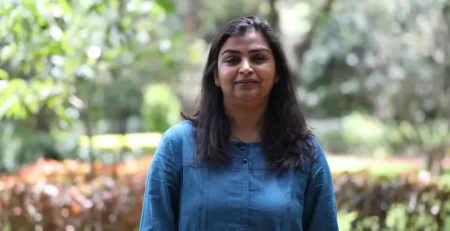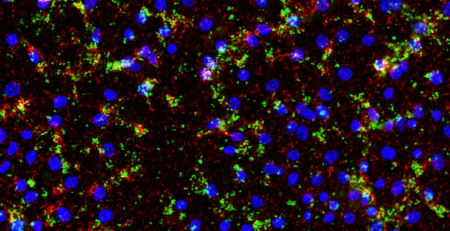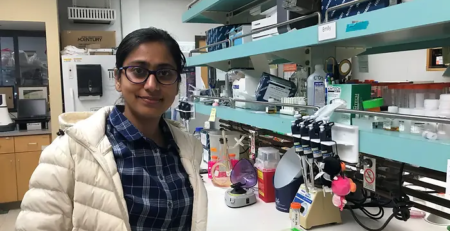
Dr. Baskar Bakthavachalu, Senior Scientist, Tata Institute for Genetics and Society, Bangalore, has been awarded the prestigious SERB Science and Technology Award for Research (SERB-STAR), instituted to recognize and reward the outstanding performance of Principal Investigators of SERB projects. Baskar and his team studied the intrinsically disordered region (IDR) of the protein Ataxin-2 and its role in the formation of granules or amyloid filaments inside neurons. Their findings indicate that the IDR domain, though assists in the development of long-term memory, also causes specific forms of neurodegeneration. They deduce that this may be because the mechanisms that allow the formation and clearance of granules under normal conditions lean towards granule accumulation in diseased conditions. Baskar’s group is currently studying the cellular mechanism that regulates the Ataxin-2 granule assembly and also exploring therapeutic strategies to block/clear Ataxin-2 granules in iPSC and mouse ALS models.

Related Posts
The rise and stumble of antibiotics
The discovery of antibiotics was a breakthrough in human history. After Alexander... read more
Divij Kinger and team win MIT’s COVID19 challenge
Divij Kinger, Research Assistant at TIGS, won the ‘Space Conversion and Utility’ track with his team at MIT’s... read more
TIGS at India Science Festival 2021
The Tata Institute for Genetics and Society (TIGS) has been a proud... read more
Venkata Sresty Tavva talks about new approaches in plant genetics research and their significance in improving food security
Dr. Venkata Sresty Tavva is the Group Leader of the Plant Genetics... read more
Wastewater epidemiology – The Bengaluru Story
Wastewater epidemiology is an approach where the wastewater generated by humans is... read more
TIGS Communications Coordinator, Ann Vinod, talks about her journey into science communication
Ann Vinod, Communications Coordinator, Tata Institute for Genetics and Society, has around... read more
Sonia Sen talks about how her exposure to nature led her to study the brains of flies and mosquitoes
Sonia’s group at TIGS studies the development and the evolution of the... read more
COVID19 BLiSc advisory guidelines
The Bangalore Life Science Cluster (BLiSc) campus, in which TIGS is located,... read more
Antibody dependent enhancement: A challenge for vaccine development
By Shweta Yadav Vertebrates, including humans, have a complex immune system, which constantly... read more
Genomic resources for vector management – An Indian perspective
By Sunita SwainGlobalization, technological advances, and the seamless flow of knowledge have... read more